


Preparing for Weather Challenges When Moving in Brisbane

Recent extreme weather events have included episodes of heavy rainfall and flooding, exceeding typical ranges in certain months or sites, according to the official records given by the Australian government. , with almost 777.4 mm of rain in 2023 and almost 8 days of rain per year in 2025, this has become one of the most serious concerns for Brisbane residents, especially as the city’s population is always on the move. Preparing for the weather challenges when moving to Brisbane can be a bit tedious; that’s why we are here with all our insights for you to ponder upon, and lay flat all your plans about the move in advance, so you can have a smooth and stress-free move. Call Highend for all your troubles and to get rid of them.
Understanding Brisbane’s Weather Patterns
Brisbane’s weather is characterised by a subtropical climate with warm, humid summers and mild, dry winters. Understanding these seasonal patterns, including summer storms, high humidity, and occasional heavy rainfall, helps residents and movers plan effectively, minimise disruptions, and protect their belongings from weather-related challenges.
Weather Conditions |
Common Challenges during moving |
Heavy Rain & Storms |
Slippery surfaces, delays, water exposure |
High Humidity |
Moisture buildup inside boxes |
Extreme Heat |
Physical strain, overheating |
Sudden Weather Changes |
Unplanned disruptions |
Strong Winds |
Difficulty handling large items |
Flood-Prone Conditions |
Restricted access routes |
Planning Your Move Around Weather Challenges
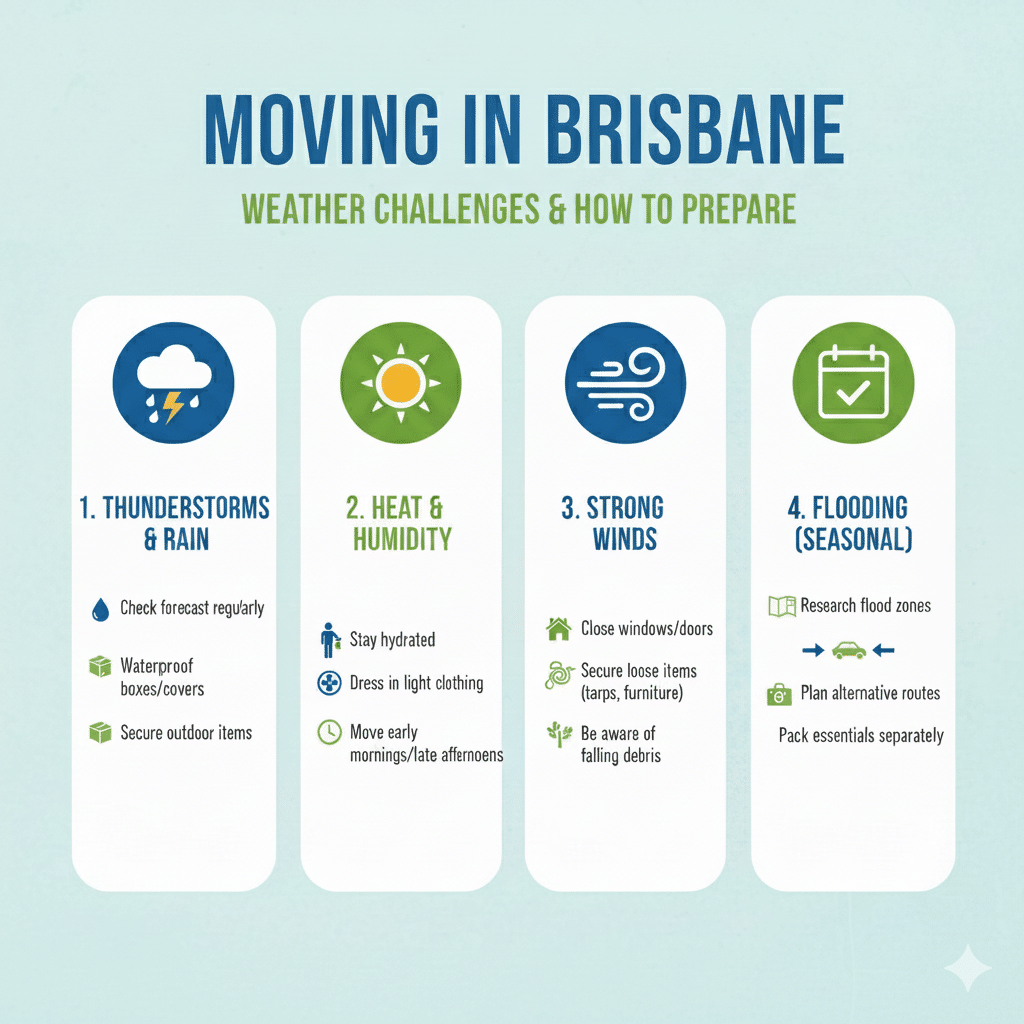
Preparing to move around, and suddenly it starts clouding outside, or becomes super hot and humid, this can happen given today’s weather changes and global warming. So here are some recommended tips for preparing for Weather Challenges When Moving in Brisbane
- Use waterproof packing materials, plastic wraps, and tarps; monitor weather forecasts closely.
- Use moisture absorbers, silica gel packs, and breathable packing for wooden items.
- Move during early morning hours, stay hydrated, and use insulated boxes for sensitive items
- Keep buffer time in your schedule and have contingency plans in place.
- Secure loose items, use proper lifting equipment, and ensure vehicles are well-loaded.
- Check flood maps, plan alternative routes, and consider temporary storage if required.
Protecting Your Future Home from Weather
This can be a tough thing to get done with all the sudden changes in the weather and unpredictability of it all. Proactive measures are to be taken when looking to protect your future from the weather and set it up. Inspecting drainage systems, sealing windows and doors, and checking roof integrity can prevent water damage during heavy rainfall. Installing weather-resistant materials, ensuring proper ventilation, and maintaining gutters also help protect the property from humidity and heat. Taking these precautions before moving in not only reduces the risk of costly repairs but also ensures a safer, more comfortable living environment from day one.
Packing & Preparing Belongings for Weather Exposure
Packing and preparing things when looking for the right way to protect your stuff from damage. Knowing any potential risks can help take preventive measures. Here are a few areas we can work with in advance. Packing and preparing belongings for weather exposure is a critical step when planning a move, especially in regions prone to unpredictable conditions. Proper preparation helps safeguard furniture, electronics, and personal items from damage caused by rain, humidity, heat, or dust. Using suitable packing materials, weather-resistant coverings, and organised labelling ensures that possessions remain protected during transit and arrive at the new location in good condition, regardless of external weather challenges.
- Damage to furniture, cartons getting soaked.
- Mould, mildew, warped furniture.
- Heat exhaustion, damage to electronics.
- Scheduling issues, extended moving time.
- Risk of injury or item breakage.
- Property damage, moving delays.
Hiring Professional Help
When hiring professional movers in Brisbane, preparing for local weather challenges is essential to ensure a smooth and damage-free relocation. Brisbane’s climate can be unpredictable, with sudden rain, high humidity, and intense heat affecting moving schedules and item safety. Reputable moving professionals plan proactively by monitoring weather forecasts, using protective coverings for furniture, and selecting suitable packing materials to guard against moisture and heat. They also schedule moves during optimal times of day and adjust logistics when adverse weather is expected. By engaging experienced movers who understand Brisbane’s conditions, you reduce delays, protect your belongings, and maintain efficiency throughout the moving process.
Conclsuion
We hope to have given you all the required information for an effortless and smooth move without letting the weather get in your way. From packing things damage-proof to making all the wrong things right, we hope to have given you the right knowledge. By monitoring forecasts, using appropriate packing materials, and engaging the right professionals, one can have the right moving experience, irrespective of the weather.
Frequently Asked Questions
What type of weather should I expect when moving to Brisbane?
Brisbane has a subtropical climate with hot, humid summers, mild winters, and a distinct wet season. Sudden rain, high humidity, and occasional storms are common, particularly between November and March.
What is the best time of year to move in Brisbane, considering the weather?
The most comfortable time to move is during autumn and winter (April to September), when temperatures are moderate, and rainfall is lower compared to summer.
How can heavy rain affect my moving day in Brisbane?
Heavy rain can cause delays, slippery surfaces, and potential water damage to belongings. It is advisable to use waterproof packing materials and plan for flexible timing.
How should I protect my furniture and electronics from humidity and rain?
Use plastic wraps, waterproof covers, sealed boxes, and moisture absorbers. Electronics should be packed in insulated boxes and kept dry at all times.
Are summer storms and flooding common during Brisbane moves?
Yes, Brisbane can experience summer storms and localised flooding. Checking weather forecasts and avoiding flood-prone routes is essential when planning a move.
What precautions should I take when moving during Brisbane’s summer heat?
Stay hydrated, start early in the morning, take regular breaks, and ensure pets and children are kept cool. Heat-sensitive items should be transported carefully.
Should I hire professional movers experienced with Brisbane weather?
Hiring local movers familiar with Brisbane’s climate can be beneficial, as they are better prepared to handle sudden weather changes and challenging conditions.